Ojochal · Whale season
Two whale seasons a year, which almost nowhere on earth gets.
One of very few places on earth visited by humpbacks from both hemispheres, which gives Marino Ballena two whale seasons a year. One population swims up from Antarctica. Another comes down from Alaska. They never meet, and between them they give this coast one of the longest humpback seasons anywhere.
The two seasons
From the south
July through mid-November
Humpbacks from Antarctica and southern Chile, having swum roughly 8,000 kilometres to breed and calve in warm water.
Peaks in August and September
From the north
Mid-December through March, sometimes into April
A separate population from California, Oregon, Washington, British Columbia and Alaska.
Peaks in January and February
Between the seasons
There are whales here even when the humpbacks have gone.
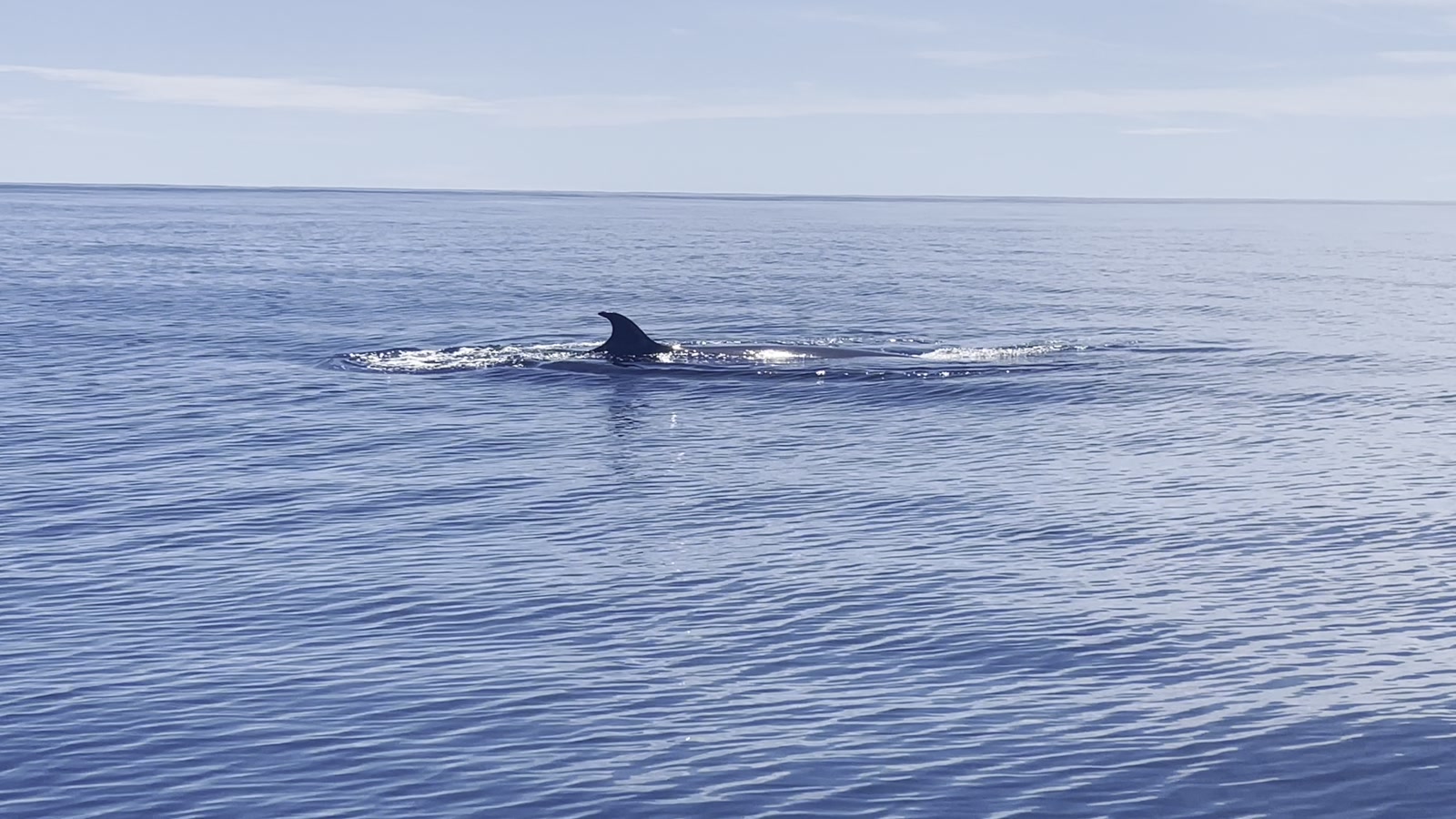
Bryde’s whales live in these waters year-round. Unlike humpbacks, they do not migrate — they stay in the warm water off this coast, which means the gap between the two humpback seasons is not the empty stretch people assume.
Spotted, spinner and bottlenose dolphins are resident year-round.
The footage was taken on the way out to Caño Island. Two of them followed the boat for twenty minutes.
Worth knowing
The best whale months are the ones everyone avoids.
August and September are the peak of the southern season. They are also, by regional convention, the low season — because it rains.
So the whole coast prices those weeks as the quiet months while the water is at its busiest. Fewer boats, more whales, lower rates, and the Whale & Dolphin Festival in the first week of September.
The honest trade: it does rain, usually in the afternoon, and underwater visibility drops. If you came to snorkel, come in February. If you came for whales, come in September.
Going out
What a morning on the water costs.
- Boat tour
- $80–100 per person. Per person, roughly 2.5–3 hours. Mornings are best.
- Park entry
- $6 per adult, plus tax. Separate from the tour.
- Paying
- Card only at the gate, cash only for parking (₡2,000–4,000). Bring both.
- From our gate
- 20 minutes to the park entrance.
Go early. The water is calmer before the wind picks up and the whales are more active. Jan and Sonia will book it for you with an operator they trust.
The festival
Festival de Ballenas y Delfines
Early September — 2026 dates are September 4–6
Discounted tours, a food fair, music and conservation talks in Bahía Ballena. Mostly a local affair, which is rather the point — it is the one week the town turns out for the whales that keep it going.
Dates shift each year. Verify before publishing a future year.
The Whale’s Tail
A kilometre-long sandbar off Playa Uvita that emerges at low tide in the shape of a fluke. Walkable roughly two hours either side of low tide, about 1.8 km each way.
Check the tide before you go, and check the park hours — the gate closes at 4pm, so an evening low tide is no use.
The whales are twenty minutes away.
From the pool you can watch the tour boats heading out. Some mornings you do not need the boat at all.